
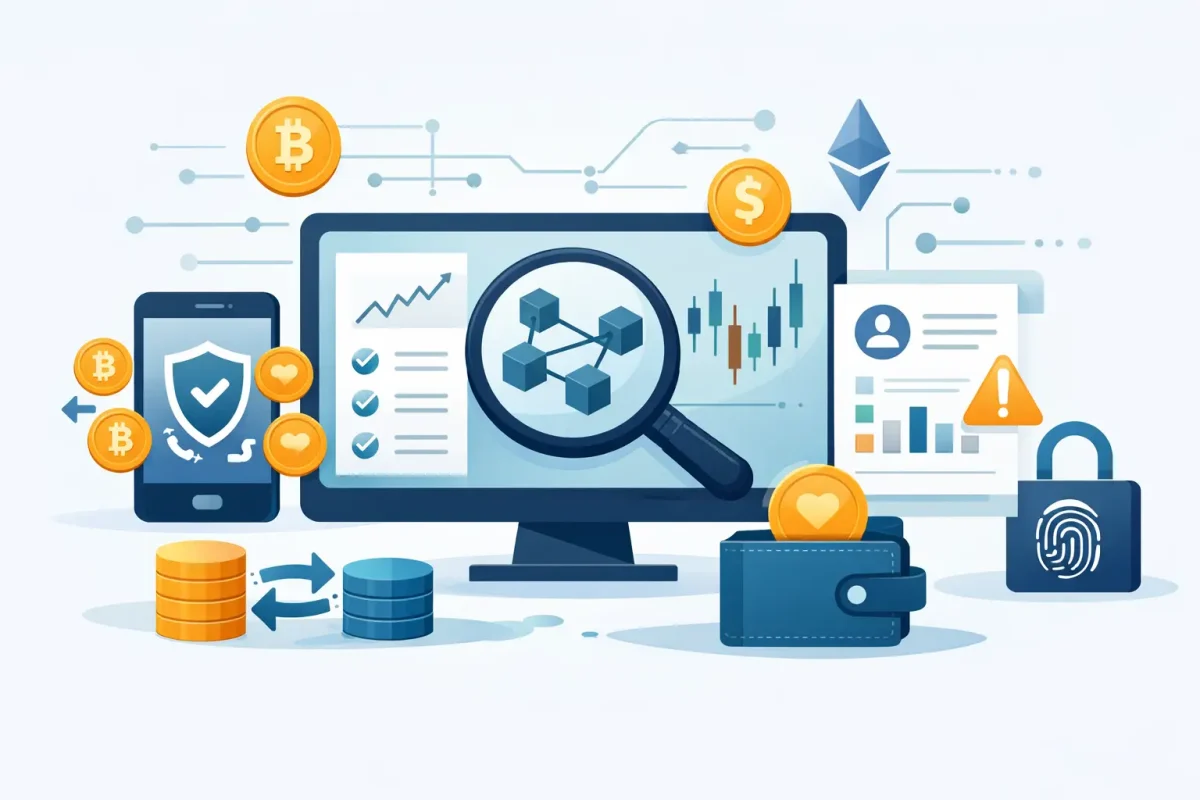
A wallet can receive funds in seconds, but understanding where that money came from – and where it goes next – is a very different task. That gap is exactly where crypto transaction monitoring matters. If you are asking what is crypto transaction monitoring, the short answer is this: it is the process of tracking, analyzing, and assessing blockchain transactions for risk, fraud indicators, suspicious patterns, and evidentiary value.
For victims of scams, business owners handling digital assets, and attorneys preparing a fraud case, this is not an abstract compliance concept. It is a practical investigative function. Proper monitoring can help identify connected wallets, flag laundering behavior, document movement across exchanges, and turn a confusing transaction history into actionable intelligence.
What is crypto transaction monitoring in practice?
In practice, crypto transaction monitoring combines blockchain analytics, behavioral analysis, and forensic review. It looks at transactions over time rather than treating each transfer as an isolated event. The goal is to detect patterns that suggest fraud, concealment, sanctions exposure, theft, layering, or other high-risk activity.
This can be done for compliance, internal controls, fraud response, or litigation support. A crypto exchange may monitor transactions to meet anti-money laundering obligations. A company may monitor treasury movements to spot unauthorized transfers. An investigator may monitor a suspect wallet cluster to trace stolen assets and document how funds were dispersed.
The phrase often gets reduced to software alerts, but that is only part of the picture. Automated tools can score wallet risk, detect links to known entities, and surface anomalies at scale. Human investigators then interpret those signals, test assumptions, and determine whether the activity actually supports a fraud finding or legal claim.
Why monitoring matters after fraud
When scam victims first review a blockchain explorer, they often assume every transaction is self-explanatory. It rarely is. Addresses are pseudonymous, bad actors fragment transfers, and funds can move through dozens of intermediary wallets in a short period.
Transaction monitoring helps establish order. It can show whether a wallet interacted with a high-risk exchange, whether funds were split in a pattern consistent with laundering, or whether multiple victim deposits were pooled before being moved out. Those details matter because they can change the next step. A traced transfer to a regulated platform may support a preservation request or legal process. A transfer through privacy-enhancing services may require a different investigative strategy.
For businesses, the value is equally practical. Monitoring can reveal whether an internal actor is moving funds outside approved channels, whether a vendor wallet has exposure to known fraud infrastructure, or whether a payment pattern suddenly deviates from normal behavior. In high-risk situations, speed matters. The earlier suspicious movement is detected, the better the chance of preserving evidence and limiting loss.
How crypto transaction monitoring works
At a technical level, monitoring starts with blockchain data. Every public blockchain transaction records wallet addresses, timestamps, amounts, and movement between addresses. Investigators and analysts use that data to map transaction flows and compare them against known risk indicators.
The first layer is attribution and clustering. Not every address belongs to a unique actor. A single scam network may control dozens or hundreds of addresses. Monitoring tools look for patterns that suggest common control, exchange deposit relationships, wallet reuse, or operational links.
The second layer is risk analysis. This includes exposure to sanctioned entities, dark market services, mixers, gambling platforms, scam wallets, ransomware infrastructure, or known fraud typologies. A single touchpoint does not always prove misconduct. Sometimes a wallet receives tainted funds unknowingly. That is why context matters.
The third layer is anomaly detection. Investigators assess whether transaction behavior is consistent with a legitimate pattern or whether it suggests concealment. Repeated small transfers, rapid hops across chains, immediate forwarding after receipt, and sudden liquidation through specific services can all be relevant. None of these facts alone is decisive, but together they can form a strong investigative picture.
What analysts look for
Effective monitoring is not just about watching money move. It is about identifying behavior that has meaning. Analysts usually focus on source of funds, destination of funds, transaction frequency, value shifts, wallet relationships, and timing.
If funds originate from a wallet already linked to scams or theft, that raises a clear risk signal. If they move into an exchange, payment processor, or over-the-counter service, that may create an opportunity for further action. If they are routed through multiple fresh wallets with no legitimate business logic, that can indicate layering or evasion.
Timing also tells a story. Fraud networks often move quickly after receiving deposits. They may consolidate victim funds within minutes, redistribute them in structured amounts, and convert assets before victims realize what happened. Monitoring helps document those sequences with enough precision to support law enforcement referrals, attorney review, insurance discussions, or civil claims.
Crypto transaction monitoring vs. simple blockchain tracing
These terms are related, but they are not identical. Blockchain tracing usually refers to following a known transaction path from point A to point B. Monitoring is broader. It can be continuous, rules-based, and risk-focused. It asks not only where the funds went, but whether the activity fits a suspicious pattern and what that means operationally.
That distinction matters in fraud cases. A victim may only need tracing at first to see whether stolen funds reached an exchange. But a business with repeated crypto exposure may need ongoing monitoring to identify suspicious counterparties before a payment is approved. Likewise, legal counsel may need monitoring outputs that are organized into a formal evidentiary timeline rather than raw blockchain screenshots.
Where automated tools help – and where they do not
Modern blockchain analytics platforms are powerful. They can process huge transaction volumes, identify links that manual review would miss, and assign risk indicators based on known wallet exposure. For large-scale monitoring, that speed is essential.
But software does not replace forensic judgment. Risk scores are not proof. Attribution databases can be incomplete. Some wallet activity looks suspicious but has an innocent explanation, while some fraud patterns look ordinary until placed in a broader timeline.
That is why the strongest crypto transaction monitoring combines AI-driven analysis with manual forensic review. An analyst validates entity connections, distinguishes direct exposure from remote exposure, and translates technical findings into language a client, attorney, or court can actually use. At Lunar Detective, that investigative layer is what turns data into evidence.
Who needs crypto transaction monitoring?
The answer depends on the problem. Scam victims need it to understand whether recovery avenues exist and whether identifiable service providers touched the stolen assets. Companies need it when they accept crypto, hold digital assets, investigate internal misconduct, or face counterparty risk. Legal professionals need it when a case requires structured tracing, asset identification, and defensible reporting.
High-net-worth individuals also use monitoring in asset disputes, divorce matters, and hidden-asset investigations. Crypto can be moved quickly and disguised through wallet fragmentation, but it is not invisible. Monitoring can reveal transfer patterns, linked wallets, and off-ramp activity that would otherwise remain buried in raw blockchain data.
Limits and trade-offs
Crypto transaction monitoring is powerful, but it is not magic. Public blockchains provide transparency, yet attribution still has limits. If funds pass through privacy coins, mixers, chain-hopping routes, or informal intermediaries, visibility can narrow. Some investigative dead ends are temporary, while others require legal process, exchange cooperation, or additional intelligence sources.
There is also a difference between detecting suspicious activity and proving identity. Monitoring may strongly indicate that several wallets belong to the same network, but tying that network to a named individual often requires more than blockchain data alone. Device evidence, exchange records, IP logs, communications, and financial records may all become relevant.
That is why credible investigators avoid overpromising. The right question is not whether monitoring guarantees recovery or attribution. The right question is whether it improves clarity, identifies opportunities, preserves evidence, and supports the next legal or investigative step. In many cases, it does exactly that.
What good monitoring delivers
When done properly, crypto transaction monitoring produces more than a risk alert. It creates a usable picture of wallet behavior, transaction flow, counterparties, and investigative options. That can support internal fraud decisions, urgent response after a scam, asset tracing strategy, or litigation preparation.
The most useful output is usually a structured forensic narrative. It explains what happened, when it happened, which wallets were involved, what risk indicators were present, and where the funds appear to have moved. For clients under pressure, that clarity is often the difference between reacting blindly and acting with purpose.
If crypto has touched a fraud matter, a hidden-asset dispute, or a suspicious transfer pattern, delay usually helps the other side. The better move is to get the transaction history analyzed early, preserve the trail while it is still fresh, and turn blockchain noise into evidence you can use.
