
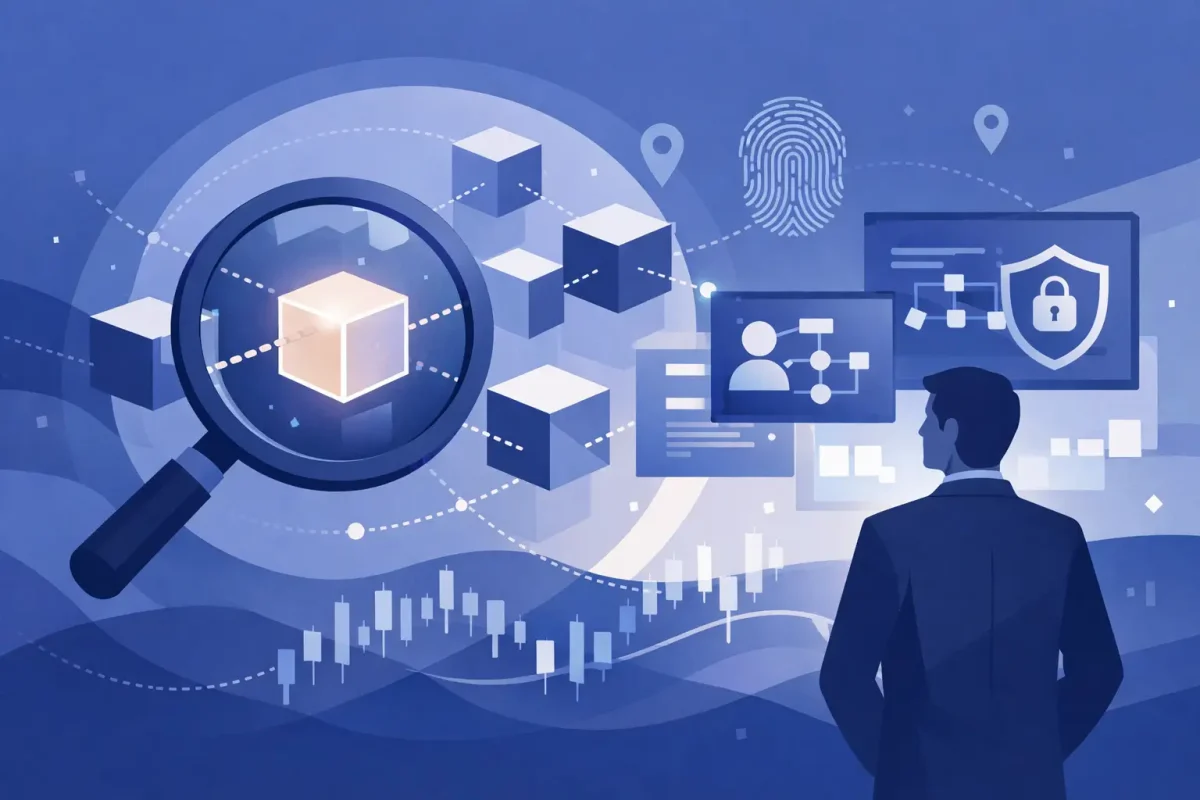
A wallet address can look anonymous at first glance, which is why so many scam victims are told their crypto is “untraceable” once it leaves. That claim is often wrong. In many cases, the answer to can blockchain transactions be traced is yes – but the real question is how far, how accurately, and whether the trail can be tied to a real person, exchange account, or recoverable asset.
Blockchain tracing is not guesswork. It is a forensic process that combines public ledger analysis, transaction pattern review, clustering techniques, exchange intelligence, and case-specific evidence. For victims, attorneys, and businesses dealing with fraud, that distinction matters. A visible transaction trail is not the same thing as a solved case, but it can be the foundation for one.
Can blockchain transactions be traced on every network?
Most blockchain transactions leave a permanent on-chain record. On transparent networks such as Bitcoin and Ethereum, investigators can usually follow transfers from one wallet to another, review timestamps, examine transaction hashes, and map movement across addresses. The blockchain itself preserves that history.
What changes from case to case is visibility and attribution. Visibility means whether the transaction path can be followed on-chain. Attribution means whether a wallet or transaction can be connected to a person, exchange, scam operation, service provider, or organization. A transaction may be traceable without immediately revealing who controls the wallet.
Some networks are easier to analyze than others. Bitcoin and Ethereum generally provide strong forensic value because their ledgers are highly transparent and widely supported by analytics tools. Stablecoins issued on public chains can also be traced, often with useful precision. Privacy-focused coins and certain obfuscation methods create more resistance, but even then, investigators may still identify points where funds entered or exited an exchange, bridge, swap service, or merchant platform.
What tracing actually reveals
When professionals trace crypto, they are not just looking at a single transfer. They are reconstructing movement over time. That often includes the originating wallet, intermediary wallets, consolidation behavior, exchange deposits, token swaps, cross-chain transfers, and attempts to break the trail through mixers or peel chains.
This analysis can reveal patterns that matter in legal and fraud contexts. For example, it may show that multiple victim payments were funneled into the same wallet cluster, which can help establish a scam network rather than an isolated incident. It may also show that stolen funds were sent to a hosted exchange wallet, creating a potential opportunity for identification through legal process.
That is where blockchain forensics becomes operational rather than theoretical. A raw transaction record is useful, but a forensic report that explains wallet relationships, flow of funds, timing, and likely service providers is much more valuable to law firms, compliance teams, and law enforcement partners.
Why people think crypto cannot be traced
The confusion usually comes from pseudonymity. Most blockchain addresses do not display a real name, home address, or business entity on the ledger. To the average person, that can feel like total anonymity.
It is not. Pseudonymous means the identifier is a wallet address rather than a verified identity. If that address interacts with a centralized exchange, regulated service, KYC platform, payment processor, NFT marketplace, or known scam wallet, the investigative picture changes quickly. The blockchain provides the trail. External evidence provides context.
Scammers rely on this misunderstanding. They know victims may assume the money is gone forever, especially when the funds are moved rapidly through multiple addresses. Speed and complexity can make a case harder, but harder is not the same as impossible.
When tracing is easiest – and when it gets harder
Tracing is strongest when the funds stay on transparent blockchains and eventually touch a service provider that collects customer identity information. That includes many major exchanges and certain custodial platforms. In those cases, investigators may be able to document the route of funds with enough precision to support subpoenas, freezing requests, or regulatory complaints, depending on jurisdiction and timing.
It gets harder when funds move through mixers, privacy coins, decentralized bridges, chain-hopping strategies, or offshore services with weak compliance. Each step can reduce clarity or delay attribution. Even so, these tactics often create patterns of their own. Repeated wallet behavior, timing correlations, dusting, consolidation, gas usage, and interaction with known infrastructure can still produce investigative leads.
Another major factor is time. The earlier a case is reviewed, the better the chances of identifying active exchange deposits, recent wallet movement, or linked infrastructure before records go cold or funds disperse further. Delay does not always end a case, but it usually increases cost and complexity.
Can blockchain transactions be traced back to a person?
Sometimes yes, sometimes only partially, and sometimes not without legal compulsion. This is the part that demands realism.
An investigator may be able to say with high confidence that funds moved from a victim wallet to a wallet cluster associated with a specific exchange. That is a strong result, but it does not automatically reveal the account holder’s identity to a private party. If the exchange is regulated and cooperative, the next step may require law enforcement involvement, court process, or legal counsel pursuing formal disclosure.
In other cases, attribution comes from the surrounding evidence rather than the exchange alone. A scammer may have reused an address across websites, used the same wallet in multiple fraud complaints, exposed identifying metadata, or interacted with a service that has already been tagged in commercial blockchain intelligence systems. Device records, emails, chat logs, payment screenshots, IP data, and account statements can all strengthen attribution.
This is why experienced investigators do not treat blockchain analysis as a standalone magic trick. The most effective work combines on-chain data with off-chain evidence.
What a professional crypto tracing investigation looks like
A credible investigation begins with evidence preservation. That means collecting wallet addresses, transaction IDs, exchange records, screenshots, communications, invoices, account statements, and any timeline details from the victim or reporting party. Missing or inconsistent records can weaken the chain of analysis later.
From there, the on-chain review maps the fund flow. Investigators identify receiving wallets, look for clustering indicators, trace onward transfers, and flag interactions with known services. More advanced cases may involve bridge analysis, smart contract interaction review, token flow reconstruction, and anomaly detection to identify patterns that ordinary explorers miss.
The final output should not be a pile of screenshots. It should be structured forensic reporting. That includes a clear explanation of methodology, wallet paths, transaction chronology, risk indicators, likely counterparties, and recommended next steps. For legal professionals and businesses, this documentation is often as important as the tracing itself because it determines whether the findings can support escalation, recovery efforts, or litigation strategy.
What tracing cannot do
Blockchain tracing has limits, and any serious firm should say so plainly. It cannot guarantee recovery. It cannot force an exchange to release identity records without the proper legal process. It cannot instantly deanonymize every wallet. And it cannot reverse transactions simply because a transfer was fraudulent.
It also does not eliminate jurisdiction problems. A trace may identify a foreign exchange, offshore entity, or cross-border movement that complicates enforcement. That does not make the investigation worthless. It means the findings must be used strategically, often with legal coordination.
Clients should be cautious of anyone promising certain recovery based only on seeing the transaction on-chain. Visibility is not the same as recoverability. The value of tracing lies in turning digital movement into actionable intelligence.
Why forensic tracing still matters after the money moves
Even when immediate recovery is uncertain, tracing can still materially change a case. It can help identify the scam pathway, support law enforcement reports, establish loss for civil proceedings, connect related victims, and document where funds were sent. For businesses, it can clarify whether a transfer resulted from internal compromise, vendor impersonation, account takeover, or deliberate fraud.
For attorneys, a disciplined blockchain trace can sharpen legal options. For victims, it can replace confusion with evidence. For compliance teams and corporate leadership, it can provide a defensible factual record rather than speculation.
That is often the difference between a dead end and a case that can be acted on.
At Lunar Detective, this kind of work sits at the intersection of blockchain analytics, digital forensics, and evidence-ready reporting. The technology matters, but so does investigative judgment. If you are asking whether a transaction can be traced, the most useful next question is whether the trail can be documented in a way that supports real-world action. In fraud cases, speed matters, but precision matters just as much.
