
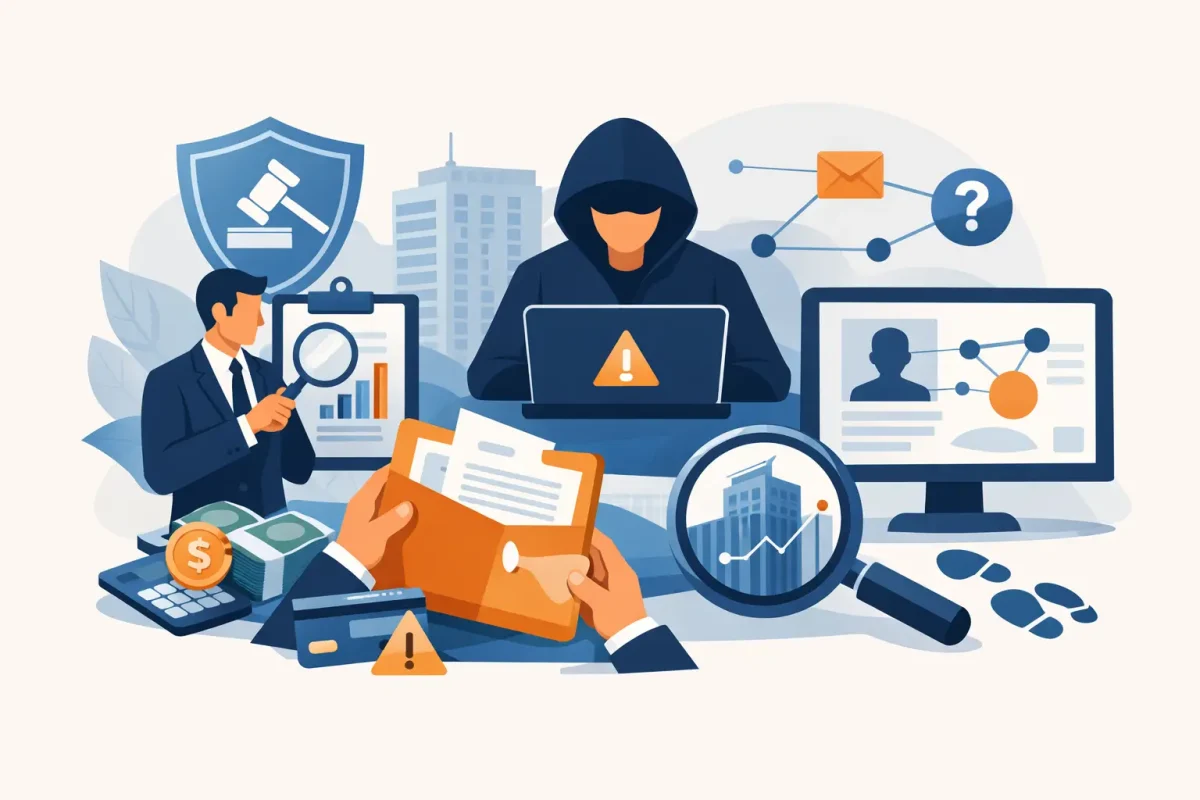
A suspicious vendor payment rarely looks dramatic at first. It shows up as an approved invoice, a familiar account number, or a routine transfer that slips past internal controls because someone trusted the process. By the time leadership realizes the pattern is not a bookkeeping error but deliberate misconduct, the business may already be facing financial loss, regulatory exposure, and serious reputational risk. That is where corporate fraud investigation services become essential.
For most companies, fraud is not a single event. It is a chain of actions spread across systems, people, and timelines. An employee manipulates expense records, a contractor uses shell entities, a finance manager diverts payments, or a partner conceals assets during a dispute. In modern cases, the trail often runs through email, cloud platforms, accounting software, mobile devices, banking records, and sometimes cryptocurrency wallets. Investigating that kind of activity requires more than instinct. It requires disciplined evidence handling, digital-forensic capability, and the ability to turn raw data into findings that executives and legal counsel can actually use.
What corporate fraud investigation services actually cover
The phrase is broad, and that matters because no two fraud matters look the same. Some investigations focus on internal theft or embezzlement. Others involve procurement fraud, payroll manipulation, kickback arrangements, financial statement fraud, trade secret theft, vendor collusion, or hidden-asset tracing tied to litigation. In many cases, the first question is not who did it. It is what happened, how long it has been happening, and where the money or value moved.
A professional investigation typically starts by stabilizing the situation. That can mean preserving email accounts, securing devices, capturing transaction histories, and identifying which records are at risk of alteration or deletion. If a company waits too long, key evidence may be overwritten, deleted, or scattered across third-party systems. Speed matters, but so does control. An aggressive internal response without a plan can alert the subject, compromise data, or create avoidable employment and legal issues.
Once preservation is handled, investigators begin reconstructing the activity. That work may include transaction analysis, forensic accounting review, digital evidence collection, communications analysis, anomaly detection, and background intelligence gathering. In more complex matters, the investigation extends to cross-border transfers, nominee entities, crypto asset movement, or coordinated conduct between insiders and outside parties.
Why businesses bring in outside investigators
A company may have internal audit, legal counsel, compliance staff, or IT personnel, yet still need external support. The reason is usually not lack of effort. It is specialization and independence.
Internal teams often know the systems but may not have the forensic tools or investigative distance required for a sensitive matter. They may also be constrained by bandwidth, reporting lines, or concerns about conflicts if a senior employee is involved. Outside corporate fraud investigation services bring a different level of objectivity. They can isolate evidence, analyze behavior across disconnected datasets, and produce structured reporting suited for legal review, insurance claims, disciplinary action, or civil recovery efforts.
This is especially true when the fraud has a digital component. A false invoice scheme might begin in accounting, but the evidence may sit in deleted emails, metadata, remote access logs, messaging apps, bank transfers, and blockchain transactions. Traditional review methods miss those links. AI-driven analysis can help surface anomalies and patterns at scale, but technology alone is not enough. Findings still need human validation, context, and legally sound documentation.
The signs that should trigger an investigation
Many organizations delay action because the initial indicators seem explainable. Margins tighten. A vendor relationship feels unusually protected by one employee. Reconciliations start taking longer. Refunds, write-offs, or duplicate payments increase. Access logs show activity outside normal hours. A terminated employee still appears connected to systems or accounts. None of these facts proves fraud on its own, but together they can justify immediate review.
The same applies to leadership disputes and shareholder conflicts. If one party suspects concealed revenue, diverted customers, hidden wallets, or undisclosed side entities, waiting for a court filing before collecting facts can be costly. Early intelligence often shapes the legal strategy that follows.
A good investigation does not begin with assumptions. It begins with indicators, preservation, and a clear scope. Sometimes the result confirms misconduct. Sometimes it reveals a process failure, poor controls, or a misunderstanding. That distinction matters. The goal is not to force a fraud narrative. It is to establish facts that stand up under scrutiny.
How a modern fraud investigation works
The strongest investigations combine forensic discipline with practical business judgment. First, investigators define the allegation, likely data sources, key custodians, and risk of evidence loss. Then they preserve and collect relevant material in a way that documents chain of custody and minimizes contamination.
From there, analysis becomes the central task. Financial records are reviewed for anomalies such as split payments, round-dollar transfers, duplicate invoices, unusual approval patterns, or vendor-account overlaps. Digital-forensic review may identify deleted files, unauthorized exports, device usage patterns, or communications that show knowledge, concealment, or coordination. If funds moved into crypto, blockchain analytics can trace wallet activity, transaction flow, clustering behavior, and potential off-ramp points.
This stage is where advanced investigative firms separate themselves. It is one thing to gather records. It is another to correlate them across systems and build a coherent timeline. For business owners and counsel, that timeline is often the difference between suspicion and action. It tells you who accessed what, when funds moved, which entities were involved, and where to focus next.
At Lunar Detective, this kind of work is approached as a combination of AI-assisted pattern detection and manual forensic review. That balance matters because automation can flag outliers quickly, while experienced investigators determine whether those outliers reflect fraud, error, or normal operational noise.
Evidence quality matters as much as detection
One of the biggest mistakes companies make is treating an investigation as an internal fact-finding exercise only. If there is a chance the matter will lead to termination, civil litigation, asset recovery, insurer involvement, or referral to law enforcement, the quality of evidence handling becomes critical.
Screenshots and informal notes are rarely enough. Decision-makers need documented findings, source attribution, preserved records, and a reporting structure that explains methodology as well as conclusions. Legal teams need clarity on what was collected, how it was analyzed, and what remains uncertain. Executives need to know the business impact, the exposure window, and the immediate remediation steps.
There is also a judgment call around interviews. In some cases, interviewing employees early helps narrow the scope. In others, it tips off the subject and accelerates evidence destruction. The right timing depends on the allegation, the digital footprint, and whether covert intelligence gathering is still needed.
What outcomes businesses should realistically expect
Corporate fraud investigation services do not guarantee recovery of every dollar. Anyone suggesting otherwise is overselling. What a strong investigation can do is establish the facts quickly, identify the likely perpetrators and methods, preserve admissible evidence, trace assets where possible, and give the company a credible basis for next steps.
Those next steps vary. Some businesses need a confidential internal report for board review. Others need litigation-support reporting, asset tracing for recovery efforts, or evidence packages for counsel and regulators. In some matters, the most valuable outcome is not immediate recovery but containment. Stopping ongoing losses, closing control gaps, and understanding how the fraud bypassed detection can prevent far greater damage.
There is also a reputational dimension. Quiet, competent handling is often as important as the technical findings. Employees, investors, counterparties, and regulators may never see the full investigation, but they will see how the company responds under pressure.
Choosing the right corporate fraud investigation services
The right firm is not always the one with the broadest claims. It is the one with relevant forensic capability, experience handling sensitive financial matters, and reporting standards that align with legal and business needs. Ask how evidence is preserved. Ask whether the team can handle bank records, digital devices, cloud data, and crypto tracing in the same matter. Ask how findings are documented and whether the work product is structured for counsel, insurers, or court use if needed.
It also helps to ask what the firm does not do. Honest scope boundaries are a sign of professionalism. Fraud matters often involve overlapping issues such as employment law, cyber intrusion, accounting review, and cross-border intelligence. A credible investigator understands where their role begins, where coordination is required, and how to keep the process defensible.
When fraud is suspected, delay usually helps the wrong person. The better approach is measured and immediate: preserve data, limit internal exposure, define the scope, and bring in investigators who can follow both the money and the digital trail. The sooner the facts are established, the sooner the business can move from uncertainty to control.
