
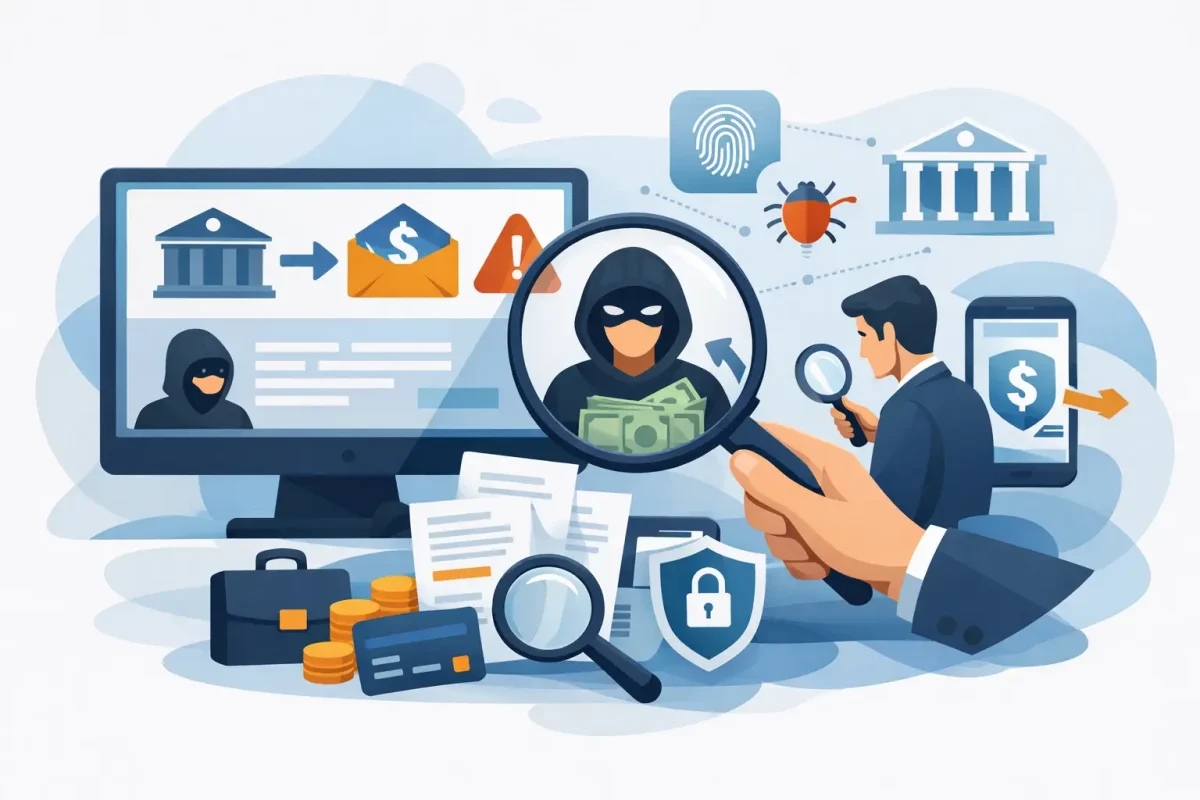
A fraudulent wire can clear in hours, and the first mistake many victims make is waiting for the bank to sort it out on its own. A wire transfer fraud investigation starts with speed, but speed without method can damage the case. The goal is not just to report the loss. It is to preserve evidence, trace the movement of funds, identify the fraud pathway, and build a record that can support recovery efforts, litigation, or criminal referral.
Wire fraud cases rarely look identical. Some begin with business email compromise, where an attacker spoofs or compromises an executive or vendor account and changes payment instructions. Others involve real estate closing fraud, vendor impersonation, romance scams, investment scams, or internal manipulation inside a company. The payment rail may be the same, but the investigative path depends on how the instruction was delivered, which accounts were used, how quickly the funds moved, and whether the fraud crossed borders.
What a wire transfer fraud investigation actually involves
A professional wire transfer fraud investigation is part financial tracing, part digital forensics, and part evidence management. Banks can attempt a recall or freeze, but that is only one piece of the response. If the receiving account has already been emptied, split, or used as a pass-through, the investigation has to reconstruct what happened with greater precision.
That usually starts with transaction analysis. Investigators examine the originating wire details, beneficiary account information, routing data, timestamps, SWIFT or domestic transfer references, associated emails or messages, invoice changes, device logs, and any account activity that shows how the fraud was initiated. In business cases, this often expands into mailbox review, header analysis, login anomalies, and vendor communication history.
The next layer is fund-flow mapping. Fraudulent wires often move through intermediary accounts, shell entities, or money mule networks. A credible investigation follows those transfers as far as records and legal access allow. Sometimes that produces a direct target for legal action. Sometimes it reveals a broader fraud pattern tied to repeat beneficiary accounts, common infrastructure, or coordinated social engineering.
The first 24 to 72 hours matter most
Recovery odds are generally higher when action begins immediately. That does not mean every fast case leads to recovery, and it does not mean a delayed case is hopeless. It means the probability changes quickly as funds are withdrawn, fragmented, or sent into harder-to-reach jurisdictions.
In the earliest stage, investigators and counsel often focus on three priorities at once. The first is containment – bank notifications, recall requests, fraud department escalation, and documentation of every contact with financial institutions. The second is evidence preservation – securing emails, text messages, invoices, account screenshots, portal logs, and internal communications before they are altered or lost. The third is attribution – determining whether the fraud came from account compromise, spoofing, insider access, fake vendor onboarding, or a larger scam network.
Clients sometimes assume that if a bank says the transfer was authorized, the matter ends there. It does not. Authorized push payment fraud, spoofed instructions, manipulated business communications, and coerced transfers still create investigative opportunities. The legal strategy may differ, but the factual investigation remains essential.
Evidence that strengthens a wire transfer fraud investigation
The strongest cases are built on organized records, not memory alone. Even small details can matter later, especially when several parties are involved and timelines are disputed.
Useful evidence often includes the wire confirmation, account statements, beneficiary details, email threads, message logs, altered invoices, contracts, vendor master changes, call records, and screenshots of payment portals or online banking sessions. On the technical side, investigators may review login history, IP data, email forwarding rules, mailbox deletion activity, domain spoofing indicators, and signs of account takeover.
For companies, internal process records are often just as important as the transaction itself. Approval workflows, dual-control failures, vendor verification procedures, and employee communications can show whether the fraud exploited a single deception or a broader control weakness. That matters not only for recovery but also for insurance claims, internal remediation, and litigation support.
Common case types and why the approach changes
Not every loss should be investigated the same way. The fraud pattern drives the method.
In business email compromise cases, the key issue is often whether an attacker gained access to a mailbox or simply impersonated a trusted sender. That distinction affects both evidence collection and liability analysis. If there was compromise, investigators may need to document unauthorized access, mail forwarding, geolocation anomalies, and exfiltration indicators. If the fraud was spoofing only, the focus may shift more heavily to message authentication failures, domain deception, and payment verification breakdowns.
In real estate wire fraud, timing is usually compressed and multiple parties are involved – buyer, title company, lender, agent, and closing attorney. The investigation often centers on who sent the fraudulent instructions, whether any mailbox was compromised, and when the false payment details entered the transaction chain.
In vendor fraud or procurement fraud, the question may be whether the payment instruction change was induced externally or facilitated internally. That is where background intelligence, records analysis, and discreet internal investigation become especially important.
Why digital forensics matters in wire fraud cases
A missing transfer is only one symptom. In many cases, the underlying event is digital compromise.
If an executive email account was accessed, if an AP clerk received a spoofed domain nearly identical to a supplier’s, or if a criminal inserted themselves into a live invoice thread, digital evidence can establish how the fraud happened and whether it is still ongoing. That is critical because a company that restores one lost payment but leaves the attack vector open may face a second incident soon after.
Digital forensics also improves reporting quality. Banks, counsel, insurers, and law enforcement respond better when the case file is structured, timestamped, and technically supported. An investigator who can connect financial movement with mailbox events, message artifacts, and account behavior creates a much clearer evidentiary picture than a victim narrative alone.
What recovery can realistically look like
Clients often ask the same question first: Can the money be recovered?
The honest answer is that it depends on timing, jurisdiction, account activity, and the sophistication of the fraud network. If the funds remain in a reachable beneficiary account, there may be a narrow window for a freeze or reversal effort. If they were layered rapidly across multiple institutions or sent offshore, the path becomes more complex and often more expensive.
Recovery also does not always mean a direct return from the first receiving bank. In some matters, the investigation supports civil action, insurance recovery, negotiated settlement, fraud reporting, or asset tracing tied to related parties. That is why an evidence-based approach matters. Even when immediate banking remedies fail, a properly documented file can still have strategic value.
When to bring in a specialist
A specialist is most useful when the loss is significant, the facts are disputed, the fraud involved digital compromise, or legal action is being considered. The same applies when a business needs independent reporting for counsel, insurers, or board-level review.
A general report to the bank may record the complaint, but a specialized investigator can go further by tracing transaction pathways, preserving digital evidence, analyzing communication records, identifying control failures, and producing structured forensic reporting. That becomes especially important in cross-border matters, multi-party disputes, or high-value transfers where every gap in the timeline can become a problem later.
Firms such as Lunar Detective approach these cases by combining AI-driven analysis with manual forensic review. That combination matters because automation can surface anomalies quickly, but high-stakes fraud cases still require human judgment, evidence discipline, and reporting that stands up under legal scrutiny.
How victims and businesses can help their own case
Do not delete emails. Do not reset compromised accounts before preserving the evidence. Do not rely on screenshots alone if full records can still be exported. And do not assume the wire was an isolated event.
If your company has experienced wire fraud, secure the relevant devices and accounts, preserve logs where possible, document every communication with banks and counterparties, and create a timeline while the facts are still fresh. If you are an individual victim, save all communications, transaction records, names used, phone numbers, and any instructions you received. What seems minor at first can later connect the case to a mule account, a spoofed domain, or a repeat fraud pattern.
A wire transfer fraud investigation is ultimately about clarity. Where did the money go, how did the deception work, what evidence exists, and which next step has the best chance of producing a result? Those answers do not come from panic or guesswork. They come from a disciplined investigation started as early as possible, with the right mix of financial tracing, digital forensics, and legally useful reporting.
